
Temple of Heaven Travel Guide: Explore Beijing’s Imperial Sacrificial Masterpiece
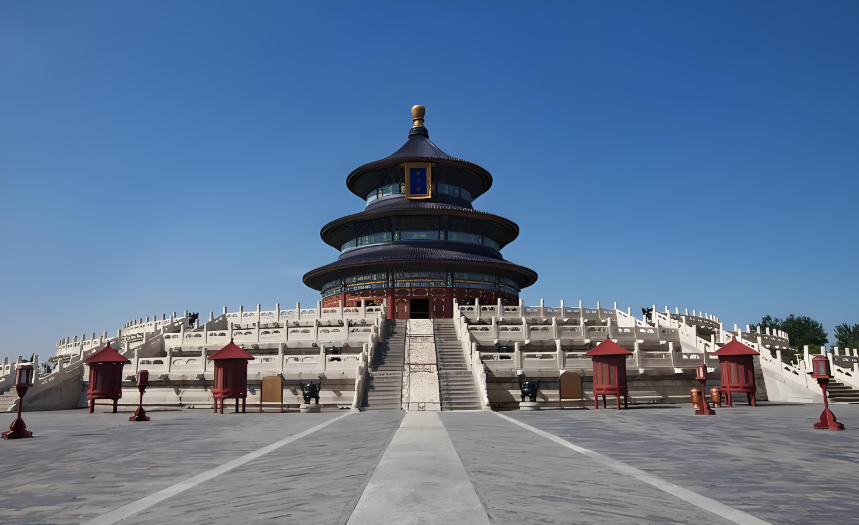
When crafting your beijing travel guide, no landmark embodies the harmony between imperial grandeur and ancient Chinese philosophy quite like the Temple of Heaven. As a UNESCO World Heritage Site and the largest ancient sacrificial complex in China, this architectural gem is where emperors of the Ming and Qing dynasties prayed for good harvests and celestial blessings. Unlike the Forbidden City’s imperial residence vibe, the Temple of Heaven offers a serene blend of sacred architecture, lush gardens, and profound cultural symbolism. This guide will walk you through everything you need to know, from its rich history and essential visiting tips to how it connects with other iconic sites like the Forbidden City.
Temple of Heaven in Chinese: Name and Cultural Connotation
First, let’s clarify temple of heaven in chinese—its official temple of heaven chinese name is 天坛 (Tiāntán), where “天 (Tiān)” means “Heaven” and “坛 (Tán)” refers to a “sacrificial altar”. This name directly reflects its core function: a sacred space for emperors to communicate with the Heavenly God. The character “坛” also emphasizes the site’s architectural feature—elevated platforms designed to bridge the mortal world and the divine, a key element of ancient Chinese state religion. Understanding this name helps you grasp the spiritual significance that permeates every corner of the complex.
Temple of Heaven History: A 600-Year Legacy of Imperial Worship
The temple of heaven history dates back to 1420, when it was first built during the reign of Emperor Yongle of the Ming Dynasty, the same ruler who oversaw the construction of the Forbidden City. Originally named the Temple of Heaven and Earth, it was renamed the Temple of Heaven in 1530 when the imperial court separated the rituals of worshipping heaven and earth. For over 500 years, 22 emperors of the Ming and Qing dynasties held 654 grand sacrificial ceremonies here, making it a central part of imperial state affairs. The complex survived wars and historical changes, was opened to the public as a park in 1918, and was inscribed on the UNESCO World Heritage List in 1998, recognizing its unparalleled value in architecture, history, and philosophy.
A key highlight of its history is the architectural embodiment of “harmony between heaven and humanity”. Every detail, from the circular shapes representing heaven to the square layouts symbolizing earth, follows ancient Chinese cosmological beliefs. For example, the main buildings are arranged along a north-south axis, with the highest structures facing south—the direction associated with heaven in traditional Chinese geomancy.
Must-See Sights: Capture Unforgettable Temple of Heaven Photos
The Temple of Heaven covers an area of 273 hectares, with most key attractions concentrated in the inner altar. Here are the unmissable spots to take stunning temple of heaven photos and immerse yourself in its culture:
1. Hall of Prayer for Good Harvests (Qinian Dian)
The iconic symbol of the Temple of Heaven, this three-story circular hall with blue glazed tiles is a masterpiece of traditional Chinese wooden architecture. Supported by 28 massive nanmu pillars, the hall has no nails or beams—an incredible feat of ancient craftsmanship. The 4 central pillars represent the four seasons, 12 inner pillars symbolize the 12 months, and 12 outer pillars stand for the 12 two-hour periods of a day. The best time to photograph it is early morning, when the soft light bathes the blue roof and the square in front is quiet, perfect for capturing its grandeur without crowds.
2. Circular Mound Altar (Huanqiu Tan)
This is the site where emperors held the Winter Solstice Sacrifice to Heaven. The altar is a three-tiered circular platform made of white marble, with every number of steps, railings, and stone slabs following the “heavenly number” 9—a symbol of imperial supremacy. The central stone, called the “Heavenly Heart Stone (Tianxin Shi)”, creates a unique acoustic effect: standing on it and speaking, your voice will echo loudly, as if amplified by the heavens. This spot is ideal for candid photos that capture the interaction between visitors and the ancient “acoustic technology”.
3. Echo Wall (Huiyin Bi)
Located around the Imperial Vault of Heaven (Huangqiong Yu), this circular wall is famous for its extraordinary acoustic properties. Whisper against one side of the wall, and the sound can be clearly heard by someone on the opposite side, over 60 meters away. It’s a fun spot for group photos and a vivid demonstration of ancient Chinese architectural ingenuity. Don’t miss the “Three Echo Stones” in front of the vault—clap your hands on the first stone for one echo, the second for two, and the third for three.
Practical Information: Temple of Heaven Tickets, Opening Hours & More
To plan a smooth visit, here’s all the essential practical information:
Temple of Heaven Tickets & Entrance Fee
The temple of heaven tickets consist of two parts: a park entrance ticket and an optional ticket for the main attractions (Hall of Prayer for Good Harvests, Circular Mound Altar, Imperial Vault of Heaven). The temple of heaven entrance fee varies by season:
- Peak season (May 1 – September 30): Park ticket 20 RMB/person; combined ticket (park + main attractions) 34 RMB/person.
- Off-season (October 1 – April 30): Park ticket 15 RMB/person; combined ticket 30 RMB/person.
Important tips: Since 2025, the Temple of Heaven has implemented a time-slot reservation system. All tickets must be booked online in advance (no on-site reservations available). It’s recommended to book 5 days ahead during holidays to avoid disappointment. You can book through the official WeChat account or authorized platforms like “Changyou Park”.
Temple of Heaven Opening Hours
The temple of heaven opening hours also change with the seasons:
- Peak season (April – September): 6:00 – 20:00 (last entry at 19:00).
- Off-season (October – March): 6:30 – 19:00 (last entry at 18:00).
The best visiting time is early morning (7:00 – 9:00) when the park is less crowded, and the light is perfect for photography. You’ll also get to see local Beijingers practicing tai chi, singing opera, or flying kites—adding a lively touch of local life to your visit.
Temple of Heaven Official Website
For the latest and most accurate information (including event updates, temporary closures, and detailed cultural introductions), visit the temple of heaven official website: www.tiantanpark.com. The website provides basic English content to help international visitors plan their trip.
Temple of Heaven & Forbidden City: How to Visit Them Together
Many travelers wonder about the connection between temple of heaven forbidden city—both were built during the Ming Yongle period and are key components of Beijing’s imperial heritage, but they serve entirely different purposes: the Forbidden City was the emperor’s residence and political center, while the Temple of Heaven was his sacred space for worshipping heaven.
To visit both efficiently: You can arrange a full day combining the two. Start with the Forbidden City in the morning (it opens at 8:30), spend 3-4 hours exploring its main halls and gardens, then take a 20-minute taxi or 40-minute bus (No. 103) from the Forbidden City’s Shenwu Gate to the Temple of Heaven’s West Gate. Visit the Temple of Heaven in the afternoon, when the golden light enhances the beauty of its architecture. This itinerary lets you experience two sides of imperial Beijing—secular power and divine worship—in one day.
Insider Tips for a Great Visit
- Recommended route: For a hassle-free and scenic visit, enter through the East Gate → 72-Corridor → Hall of Prayer for Good Harvests → Danbi Bridge → Echo Wall & Imperial Vault of Heaven → Circular Mound Altar → Exit through the South Gate. This route follows the natural flow of the complex and covers all key attractions without backtracking.
- Photography spots: Besides the Hall of Prayer for Good Harvests, the 72-Corridor (a 350-meter-long covered walkway) is perfect for frame shots with its row of red pillars. In spring (late April), the lilac bushes near the Hall of Prayer for Good Harvests bloom, creating a romantic backdrop; in autumn (late October to early November), the ginkgo trees around the Zhai Palace (Emperor’s Fasting Palace) turn golden, offering stunning fall photos.
- Local food nearby: After your visit, head to Ciqikou (a 10-minute walk from the South Gate) to try authentic Beijing snacks like douzhi (fermented bean juice) and xiaolongbao (steamed buns) at Laociqikou Douzhi Dian.
- Etiquette reminder: The Temple of Heaven is a cultural heritage site—please keep your voice down, especially in the sacrificial areas, and do not climb on the ancient architecture or touch the cultural relics.
Conclusion
The Temple of Heaven is more than just a tourist attraction—it’s a window into ancient Chinese cosmology, imperial rituals, and architectural genius. Whether you’re marveling at the nail-less Hall of Prayer for Good Harvests, whispering against the Echo Wall, or simply strolling through its tranquil gardens, you’ll feel the weight of history and the beauty of harmony between humanity and nature. As a must-visit in any beijing travel guide, this sacred complex promises an unforgettable experience that combines wonder, culture, and a touch of serenity. Add it to your itinerary, and let the Temple of Heaven reveal the spiritual side of Beijing to you.