
A String of Candied Hawthorns: Beyond Liulichang, That Bright Red Is Beijing’s Childhood Hue
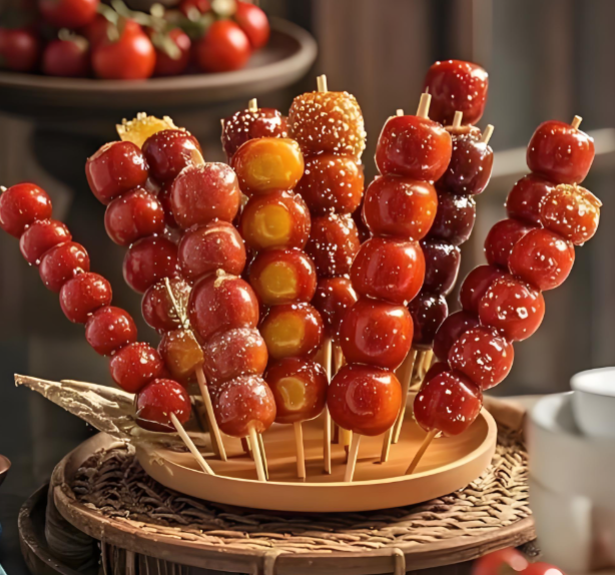
Beyond the ancient thresholds of Liulichang, where the fragrance of ink lingers and time seems to slow, a vivid streak of red cuts through the gray of traditional hutong lanes. That is candied hawthorns—tanghulu—skewered on bamboo sticks, glistening with a crisp sugar coating that shatters at the first bite. More than a snack, it is a nostalgic symbol woven into Beijing’s fabric, a taste of childhood that bridges centuries of history. For any traveler seeking authentic local charm, this iconic treat is an unmissable chapter in every Beijing travel guide.
Liulichang, a cultural artery of Beijing since the Qing Dynasty, has long been intertwined with the story of candied hawthorns. Once a gathering place for scholars and artists, this 800-meter street, lined with ancient bookstores and calligraphy shops, has seen generations of visitors pair the pursuit of literary elegance with the simplicity of tanghulu. Historic brands like Xinyuanzhai and Bulaoquan, founded in the Qing Dynasty, first popularized exquisite candied hawthorns here—some with plump hawthorns stuffed with red bean paste and melon seeds, others as single, glossy fruits nestled in oil-paper boxes, a far cry from the street-side skewers we know today. Even literary giants like Ji Xiaolan sang praises of Bulaoquan’s creations, cementing tanghulu’s status as a beloved delicacy beyond mere sustenance.
The magic of candied hawthorns lies in its perfect balance of sweet and sour, and its ability to evoke nostalgia across ages. For locals, a bite transports them to childhood winters—running along Liulichang’s lanes, hands clutching a sticky skewer, the cold air enhancing the crunch of the sugar shell and the tart juiciness of the hawthorn inside. For visitors, it is a gateway to understanding Beijing’s soul: a city where grand imperial history coexists with the warm, unassuming joys of street food. Unlike elaborate imperial dishes, tanghulu is accessible to all, sold by vendors whose carts blend seamlessly with Liulichang’s historic storefronts, creating a scene straight out of a traditional painting.
A reliable Beijing travel guide will tell you that Liulichang is the ultimate spot to savor authentic candied hawthorns. While modern variations with strawberries, grapes, or even yam exist, the classic hawthorn skewer remains the best choice to experience tradition. Visit in winter, when the cold weather sets the sugar coating to a glass-like crispness, and pair your tanghulu with a stroll past Rong Bao Zhai—a centuries-old art shop—or China Bookstore, where ancient tomes line the shelves. The combination of literary charm and sweet nostalgia makes this stretch of street a must-visit for cultural explorers.
As the sun dips low over Liulichang’s tiled roofs, the glow of street lamps catches the glossy red of candied hawthorns, casting a warm light on passersby. Each skewer carries the weight of history—from its imperial origins as a remedy for a Song Dynasty concubine to its place as a beloved street snack—and the lightness of childhood joy. For travelers, it is more than a treat; it is a tangible piece of Beijing’s identity. NoBeijing travel guide is complete without pausing at Liulichang, taking a bite of that bright red sweetness, and feeling the city’s nostalgic heart beat beneath its historic streets.