
A Bowl of Zhajiangmian: Deep in Hutongs, Beijing’s Daily Life in Homely Flavors
Venture beyond Beijing’s grand imperial palaces and bustling commercial streets, and you’ll find a world of narrow hutongs winding like silent threads through the city. Here, amid the gray-tiled roofs and red wooden doors, the rich aroma of zhajiangmian—Beijing’s iconic fried sauce noodles—lingers in the air. More than just a local dish, it’s a taste of authentic Beijing life, a culinary symbol that weaves together tradition, family, and the city’s warm, unpolished charm. For travelers eager to go beyond surface-level Beijing tourism, a bowl of homemade zhajiangmian in a hidden hutong is an indispensable experience.
Zhajiangmian’s roots run deep in Beijing’s history, dating back to the Qing Dynasty. Originally a staple of northern Chinese households, it evolved into a beloved Beijing specialty as vendors began selling it in street markets and hutong alleys. Unlike elaborate imperial cuisines that once graced the Forbidden City, zhajiangmian is a dish of the people—simple, hearty, and packed with comforting flavors. Its core consists of two parts: hand-pulled wheat noodles and a savory fried sauce, with an array of fresh toppings adding texture and freshness. Every family in Beijing has its own recipe, passed down through generations, making each bowl a unique expression of home.
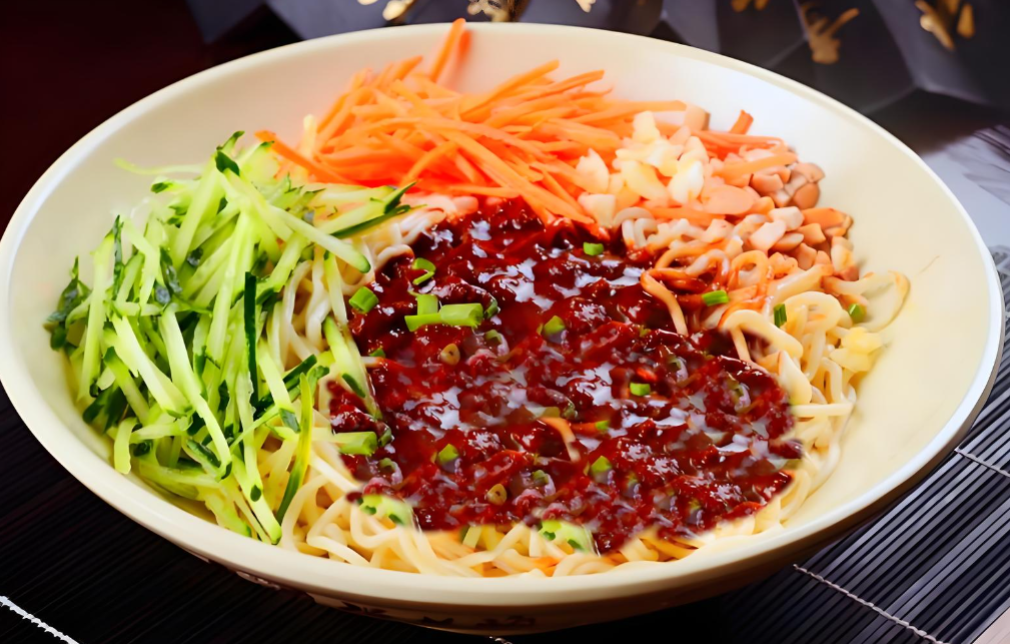
The magic of zhajiangmian lies in its balance of simplicity and depth, starting with the fried sauce—the soul of the dish. Traditional sauce is made by stir-frying diced pork belly (or minced pork) with sweet bean paste, soy sauce, and a hint of sugar. Some families add mushrooms, bamboo shoots, or preserved vegetables for extra layers, while purists stick to the classic pork and bean paste combination. The key is slow cooking: the sauce simmers gently, allowing the flavors to meld and the pork to become tender, resulting in a thick, glossy mixture that coats every strand of noodles.
The noodles, too, play a crucial role. Authentic zhajiangmian uses hand-pulled noodles, which are chewy, springy, and able to hold the rich sauce. For those who prefer convenience, machine-made noodles are also common, but hand-pulled ones offer an unmatched texture. Once the noodles are cooked al dente, they’re served hot, topped with a generous spoonful of fried sauce and an assortment of fresh garnishes: shredded cucumber, carrots, mung bean sprouts, scallions, and sometimes a hard-boiled egg. Travelers are encouraged to mix everything together—twirling the noodles to coat them in sauce, blending the crispness of the vegetables with the savory sauce and chewy noodles.
To truly experience zhajiangmian, skip the touristy restaurants and head to the hutongs. Places like Nanluoguxiang, though popular with visitors, still have family-run eateries serving authentic bowls. For a more off-the-beaten-path experience, wander the alleys around Shichahai or Qianmen, where small, unassuming shops cater to locals rather than tourists. Here, you’ll sit at wooden tables alongside Beijing residents, watching as chefs stir-fry sauce in large woks and pull noodles by hand. The atmosphere is casual and welcoming—no fancy table settings, just the clink of bowls and the sound of friendly chatter, a far cry from the formal dining of luxury hotels.
Zhajiangmian also offers a window into Beijing’s family culture. In many households, making zhajiangmian is a communal activity: grandparents chop vegetables, parents stir the sauce, and children help arrange toppings. It’s served at family gatherings, festivals, and even on ordinary weeknights, a dish that brings people together. For foreign travelers, sharing a bowl with a local family (through homestay experiences or cultural tours) is a chance to connect with Beijing’s residents, learn about their lives, and gain a deeper understanding of the city beyond its famous landmarks.
As part of Beijing tourism, exploring the world of zhajiangmian is a way to embrace the city’s “human touch.” It’s a reminder that Beijing is not just a collection of historic sites, but a living, breathing city where tradition thrives in everyday moments. A bowl of hot zhajiangmian on a cool morning, eaten in a quiet hutong, captures the essence of Beijing—warm, hearty, and full of life. It’s a taste that stays with you long after your trip, a memory of the city’s烟火气 (yānhuǒ qì)—the warmth and vibrancy of daily life.
Whether you’re a food lover or a cultural explorer, zhajiangmian is a must-try during your time in Beijing. It’s a dish that transcends language, a universal expression of comfort that invites you to slow down, savor the moment, and experience Beijing as the locals do. In the end, Beijing tourism is as much about the flavors of the city as it is about its sights—and a bowl of zhajiangmian is the perfect way to taste the heart of Beijing.