
A Peking Duck: Carving as Art, Savoring Beijing’s Personality in Ritual
To truly understand Beijing, one must not only walk its imperial palaces and winding hutongs but also sit down to a feast of Peking duck. More than a world-famous dish, it is a cultural expression—each slice, wrap, and bite tells a story of the city’s blend of grandeur and modesty, precision and warmth. From the master chef’s artful carving to the communal joy of sharing the meal, Peking duck embodies the very personality of Beijing: respectful of tradition yet welcoming to all. For anyone immersed inBeijing tourism, this iconic dish is an essential experience that goes beyond taste, offering a glimpse into the soul of the city.
The legacy of Peking duck is deeply intertwined with Beijing’s imperial past, dating back to the Ming Dynasty (1368–1644). Originally known as “Roast Duck of the Imperial Palace,” it was a dish reserved for emperors and nobles, crafted with meticulous care to reflect the court’s elegance. Chefs of the era spent years perfecting the cooking process—selecting only the finest white-feathered ducks, air-drying them for hours to crisp the skin, and roasting them over fruit wood to infuse a subtle sweetness. As the centuries passed, the dish moved from the palace to local restaurants, adapting to the tastes of ordinary Beijingers while retaining its ritualistic essence. This evolution mirrors Beijing itself: a city that honors its imperial heritage but remains rooted in the warmth of everyday life.
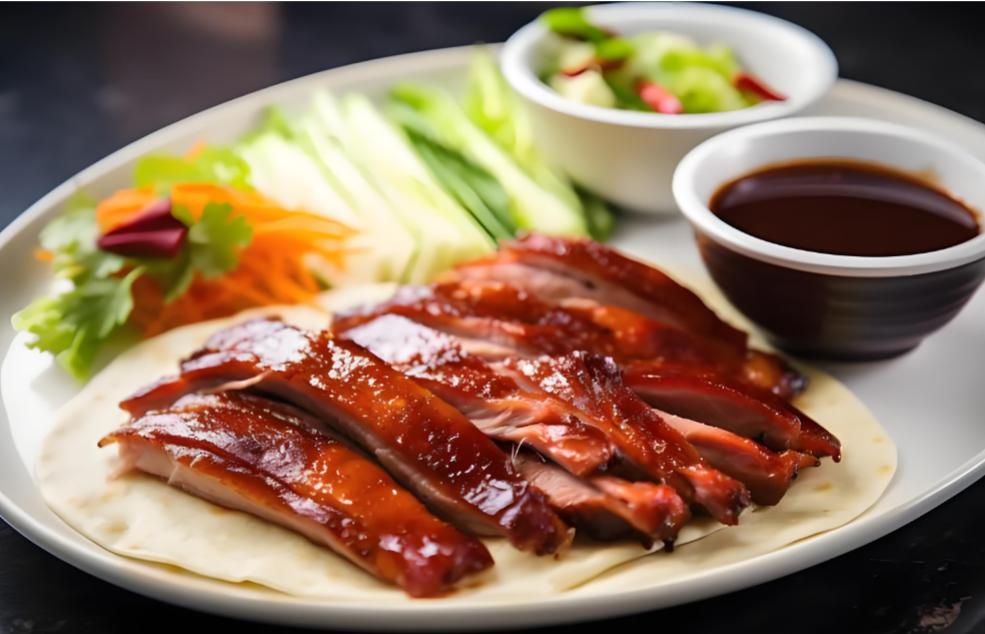
The most mesmerizing part of the Peking duck experience is the carving—a skill that elevates cooking to performance art. True masters carve the duck within minutes of removing it from the oven, while the skin is still shatteringly crisp and the meat juicy. Using a thin, sharp knife, they slice the duck into 90 to 108 uniform pieces, each combining a layer of golden skin and tender meat. The two classic styles—”willow leaf slices” (long and slender) and “fish scale slices” (round and overlapping)—require years of practice to master, as chefs must balance precision with speed. This dedication to craftsmanship is a hallmark of Beijing’s personality: a respect for detail and tradition that shines through in every aspect of life.
Eating Peking duck is a ritual designed to be shared, emphasizing community and hospitality—values at the core of Beijing’s character. The table is set with delicate lotus leaf pancakes, sweet bean sauce, julienned scallions, cucumber strips, and sometimes shredded radish. Diners wrap each slice of duck in a pancake, adding a dollop of sauce and fresh vegetables to balance flavors and textures. There’s no rush; the meal is meant to be savored slowly, with friends and family chatting as they assemble each bite. This communal aspect reflects Beijingers’ warm, outgoing nature—welcoming guests as part of the family and turning a meal into a memorable gathering.
For travelers exploring Beijing tourism, choosing where to eat Peking duck is part of the adventure. Iconic restaurants like Quanjude and Bianyifang, with decades of history, offer an authentic taste of tradition—Quanjude is famous for its open-oven roasting method, while Bianyifang specializes in the older closed-oven technique. For a more intimate experience, head to family-run restaurants in hutongs, where chefs add their own subtle twists to the classic recipe, blending tradition with local charm. No matter where you go, the experience is the same: a celebration of flavor, craftsmanship, and community.
Beyond its delicious taste, Peking duck reveals Beijing’s unique personality—one that balances grandeur with modesty, tradition with adaptability. The dish’s imperial roots speak to the city’s historical significance, while its communal ritual reflects the warmth of its people. The precision of the carving shows a dedication to excellence, while the simple accompaniments highlight a love for authenticity. For travelers, a Peking duck feast is more than a meal; it’s a way to connect with Beijing on a deeper level, understanding its culture not through landmarks alone, but through the flavors and rituals that define it.
As you take your last bite of duck, wrapped in a soft pancake with the perfect blend of sweet and fresh flavors, you’ll realize why Peking duck is more than a dish—it’s a symbol of Beijing. It’s a reminder that Beijing tourism is as much about savoring the city’s culinary heritage as it is about exploring its historic sites. In every slice, every wrap, and every shared laugh around the table, you’ll taste the true personality of Beijing: a city that honors its past, embraces its present, and welcomes the world with open arms.