
A Bowl of Douzhi: Embracing Imperfection, the True Taste of Travel in Beijing
Before arriving in Beijing, my travel checklist was filled with “perfect” landmarks: the golden-roofed Forbidden City, the majestic Great Wall winding through mountains, the bustling Sanlitun with its sleek skyscrapers. I imagined a journey of postcard-worthy moments, where every experience would be smooth, beautiful, and instantly satisfying. Little did I know that the most memorable lesson about travel—and about Beijing—would come from a bowl of something unapologetically imperfect: douzhi, or bean juice, the fermented drink that divides first-time tasters like no other.
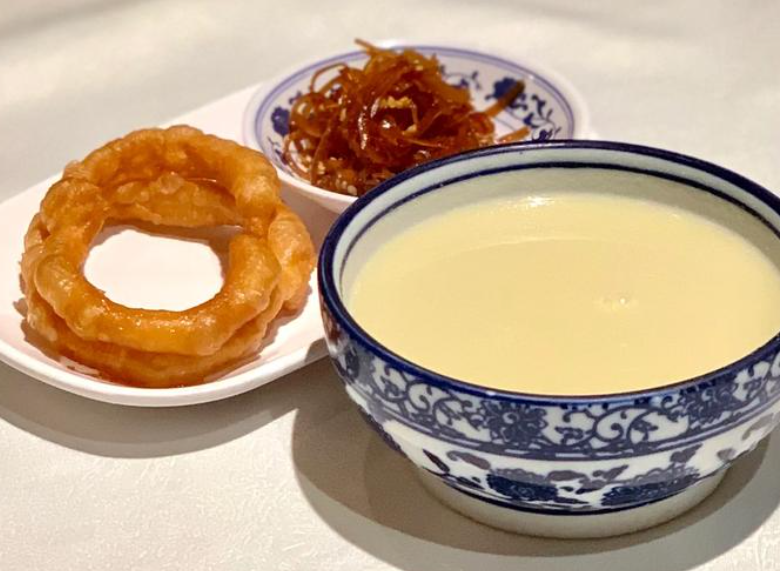
My first encounter with douzhi was in a tiny, no-frills shop tucked away in a hutong near Qianmen. The air inside was thick with a sour, pungent aroma that made me pause at the door. Locals sat on simple stools, sipping from chipped bowls, tearing crispy jiaoquan (fried dough rings) and dipping them into the pale grayish-yellow liquid. Their faces held a quiet contentment, a contrast to my own hesitation. “You have to try it,” my local friend said with a smile. “It’s not for everyone, but it’s the real Beijing.”
I took a small sip, and my taste buds revolted at first. The sourness was sharp, almost tangy, with a lingering earthy aftertaste that felt foreign, even uncomfortable. I wanted to set the bowl down immediately, to write off douzhi as a “failed” culinary experience. But then I looked around again—at the elderly man next to me, slowly savoring each bite, at the shop owner calling out greetings to regulars, at the sunlight filtering through the wooden windows and onto the bowls of bean juice. This wasn’t a “perfect” food, polished for tourists. It was a food of life, with all its roughness and authenticity.
That’s when it hit me: I’d been approaching travel all wrong. I’d been chasing perfection—perfect photos, perfect meals, perfect experiences—without realizing that the beauty of travel lies in the imperfect, the unexpected, the things that challenge us. Douzhi isn’t meant to be universally loved. Its sourness is a reflection of Beijing’s own duality: a city that blends imperial grandeur with hutong simplicity, where modern skyscrapers stand next to centuries-old alleyways, and where tradition and innovation coexist in messy, wonderful harmony.
I took another sip, slower this time. I paired it with a piece of jiaoquan, letting the crunch of the dough balance the sourness, and a pinch of salted pickles to add a salty kick. Suddenly, the flavor shifted. The sharpness mellowed, giving way to a subtle bean sweetness, and the aroma that had felt overwhelming now seemed like a warm, familiar hug. I wasn’t just tasting douzhi anymore—I was tasting the history of Beijing, the daily lives of its people, the kind of authenticity that can’t be packaged or sold to tourists.
Over the next few days, I sought out more “imperfect” moments in Beijing. I got lost in the winding hutongs, missing the “must-see” spots but stumbling upon a family making dumplings in their courtyard. I struggled to order food with my limited Chinese, but the restaurant owner patiently guided me, even sharing a plate of his own home-cooked vegetables. I watched the sunset over the Forbidden City, not from the perfect viewing platform, but from a small park nearby, surrounded by locals flying kites and chatting.
Each of these moments was far from perfect by my initial standards. I got lost, I struggled, I felt out of place at times. But they were the moments that stayed with me, the moments that made me feel truly connected to Beijing. Just like douzhi, these experiences didn’t cater to my expectations—they challenged me to adapt, to learn, to embrace the unknown.
On my last day in Beijing, I went back to that tiny douzhi shop. I ordered a bowl without hesitation, and this time, I savored every sip. It still wasn’t the “best” drink I’d ever had, but it was the most meaningful. As I finished my bowl, the shop owner gave me a nod of approval. “You get it now,” he said.
I do get it now. Travel isn’t about finding perfection. It’s about embracing imperfection—the sourness of douzhi, the confusion of getting lost, the awkwardness of language barriers. These are the things that make travel real, that help us see a place not as a collection of landmarks, but as a living, breathing community. A bowl of douzhi taught me that the true taste of travel isn’t in the perfect meals or the postcard photos. It’s in the courage to try something new, the willingness to be uncomfortable, and the joy of discovering beauty in the unpolished, imperfect moments.
As I left Beijing, I didn’t take with me a bag full of souvenirs. I took with me the memory of that first sip of douzhi, and the lesson it taught me: to stop chasing perfect, and start embracing the wonderful, messy, imperfect world around me. That’s the true magic of travel—and it all started with a bowl of sour, pungent, absolutely unforgettable bean juice.