
Forbidden City Travel Guide: Explore the Imperial Treasure of Beijing
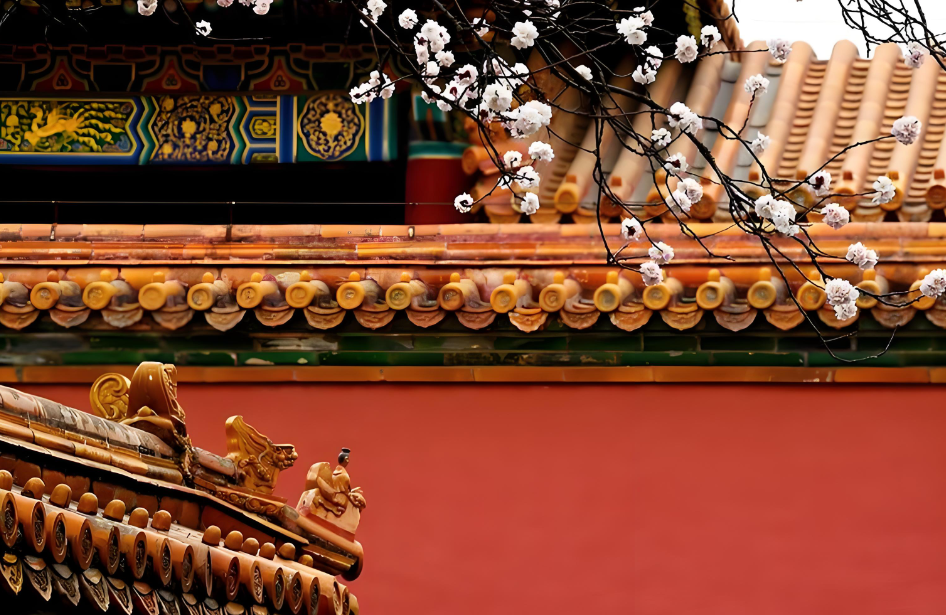
As a dazzling pearl of Beijing’s cultural heritage, the Forbidden City is a testament to China’s imperial history and architectural splendor. This essentialBeijing travel guide will unravel the mysteries of this ancient palace, answer all core questions, and provide you with all the information needed to create an unforgettable journey.
Answers to Core Questions About the Forbidden City
1. Why is it called the Forbidden City (Gu Gong)?
The predecessor of “Gu Gong” (the Palace Museum) was “Zi Jin Cheng” (the Purple Forbidden City), and its name carries profound cultural and political implications. “Zi” (purple) originates from “Zi Wei Yuan” (the Purple Forbidden Enclosure), which, in ancient Chinese astrology, was regarded as the heavenly abode of the Supreme Deity. Since the earthly emperor was considered the “Son of Heaven,” his residence was seen as the earthly counterpart of the heavenly palace, hence the “Zi” in the name. “Jin” (forbidden) emphasizes that no one could enter or exit the palace at will without the emperor’s explicit permission, marking it as an exclusive royal territory off-limits to ordinary people.
2. Who lived in the Forbidden City?
For nearly 500 years, the Forbidden City has been the royal residence and political center of China’s Ming (1368–1644) and Qing (1644–1912) dynasties. A total of 24 emperors lived here, accompanied by the royal family, concubines, and thousands of eunuchs and maids who attended to their daily needs. It was not only a place of residence but also the core seat of imperial power, where important state affairs, ritual celebrations, and diplomatic activities were held.
3. How old is the Forbidden City?
The construction of the Forbidden City began in the Yongle period of the Ming Dynasty (1406) and was completed in 1420, making it over 600 years old. Over the long years, it has undergone numerous renovations and reconstructions (for example, the Hall of Supreme Harmony was rebuilt after a fire in 1679), but its core layout and architectural style have been preserved, perfectly inheriting the essence of ancient Chinese imperial architecture.
4. How big is the Forbidden City?
Covering an area of 72 hectares (approximately 180 acres), the Forbidden City is the largest and best-preserved ancient wooden palace complex in the world. It consists of more than 980 buildings and over 8,700 rooms, distributed symmetrically along the north-south central axis—which also serves as the central axis of Beijing, embodying the ancient Chinese imperial ruling philosophy of “centrality as reverence.” The entire complex is surrounded by a 10-meter-high city wall and a 52-meter-wide moat, forming a solid defensive system.
5. Why are all the roofs of the Forbidden City yellow?
The yellow glazed tiles covering most of the Forbidden City’s roofs are not just a decorative choice but a symbol of supreme imperial power. In ancient China, colors were closely associated with the Five Elements (Wu Xing) and social hierarchy. Yellow, corresponding to the element of Earth (which was believed to be the center of the universe), was designated as the exclusive color of the emperor. Before the Ming Dynasty, palace roofs mostly used colors such as gray, black, and green, but during the Ming and Qing dynasties, yellow became the mainstream to demonstrate the emperor’s absolute authority. However, there are exceptions—for example, the Hall of Literary Glory (Wen Hua Dian), the predecessor of the Wen Yuan Ge (Imperial Library), originally had green roofs (symbolizing growth, suitable for crown princes), and the Wen Yuan Ge (Imperial Library) had black roofs (symbolizing water to prevent fires).
6. Why was the Forbidden City called a “forbidden place”?
The “forbidden” nature of the Forbidden City stems from its position as an imperial palace and the core of national power. During the Ming and Qing dynasties, strict access control was implemented here to safeguard the dignity of the royal family and the security of government affairs. Only authorized personnel (such as high-ranking officials, nobles, and palace attendants) could enter specific areas, while ordinary people were prohibited from approaching the palace walls. This “forbidden” attribute strengthened the hierarchical gap between the emperor and the people, highlighting the sacred inviolability of imperial power.
7. What is the Forbidden City used for today?
After the end of the imperial system, the function of the Forbidden City underwent earth-shaking changes. In 1925, after the last emperor Puyi abdicated, the Palace Museum was established here, and this former imperial palace was officially opened to the public. Today, it has become a world-class museum and cultural heritage site, housing more than 1.86 million cultural relics, including paintings, calligraphy, porcelain, jade, and imperial artifacts from the Ming and Qing dynasties. It is not only a popular tourist destination but also a center for cultural research, heritage preservation, and international cultural exchange, showcasing China’s rich historical and artistic treasures to the world.
8. Why is the Forbidden City important?
The Forbidden City has irreplaceable importance in the fields of history, culture, and architecture. As a UNESCO World Heritage Site inscribed in 1987, it is recognized as the largest well-preserved ancient wooden building complex in the world, representing the pinnacle of traditional Chinese palace architecture. It is a tangible witness to China’s Ming and Qing dynasties, reflecting the social system, political ideology, and cultural aesthetics of late feudal China. In addition, the integration of its symmetrical layout with Beijing’s urban planning embodies the ancient Chinese philosophical concept of “harmony between humans and nature.” As a cultural symbol, the Forbidden City connects China’s past and present, passing on the nation’s excellent traditional culture to future generations.
Practical Travel Tips for Visiting the Forbidden City
Best Time to Visit
The Forbidden City is open year-round, but the best time to visit is spring (March–May) and autumn (September–November), when the weather is mild and the scenery is pleasant. Please avoid weekends and national holidays (such as the Spring Festival and National Day), when the number of tourists is extremely large. It is recommended to arrive early (opening hours: 8:30 AM) to avoid crowds and admire the palace’s beauty in a relatively quiet environment.
Ticketing and Entry Information
Tickets must be booked online in advance through the official website of the Palace Museum or authorized platforms—there are no on-site ticket windows. There are two types of tickets: Basic Ticket (granting access to the Outer Court area) and Combined Ticket (including access to core halls such as the Hall of Supreme Harmony, Hall of Central Harmony, and Hall of Preserving Harmony). Ticket prices adjust with the seasons (peak season: April–October; off-season: November–March). Foreign visitors can book tickets using their passports.
The main entrance is the Meridian Gate (Wu Men), and visitors must exit through the Gate of Divine Prowess (Shen Wu Men) or the East Glory Gate (Dong Hua Men). Please note that the Forbidden City is closed every Monday (except during national holidays and special exhibitions).
Recommended Tour Route
To make the most of your visit, here is an efficient recommended route: Meridian Gate → Hall of Supreme Harmony → Hall of Central Harmony → Hall of Preserving Harmony → Inner Court (Palace of Heavenly Purity, Hall of Union, Palace of Earthly Tranquility) → Imperial Garden → Gate of Divine Prowess. This route covers the most core attractions and proceeds along the central axis, allowing you to fully appreciate the symmetrical beauty and grandeur of the palace layout. It is recommended to reserve 3–4 hours for an in-depth visit.
Cultural Etiquette and Notes
- Respect cultural heritage: Do not touch ancient buildings, cultural relics, or exhibits. Smoking, eating, and drinking are prohibited in most areas.
- Dress appropriately: Since you will be walking for several hours, wear comfortable shoes. Out of respect for the cultural site, it is recommended to dress modestly.
- Hire a guide: It is advisable to hire a professional guide (offering services in multiple languages) or use an audio guide to gain an in-depth understanding of the historical stories behind the palace buildings and cultural relics.
- Nearby attractions: After visiting the Forbidden City, you can explore nearby attractions such as Tiananmen Square to the south and Jingshan Park to the north—climbing Jingshan Park offers a magnificent panoramic view of the Forbidden City’s golden roofs.
Conclusion
The Forbidden City is more than just a palace—it is a living museum that tells the story of China’s imperial era. Whether you are obsessed with history, passionate about architecture, or fond of culture, this iconic attraction will leave you in awe. With this travel guide, you are ready to embark on a journey through time and explore the grand charm of China’s imperial heritage in the heart of Beijing.